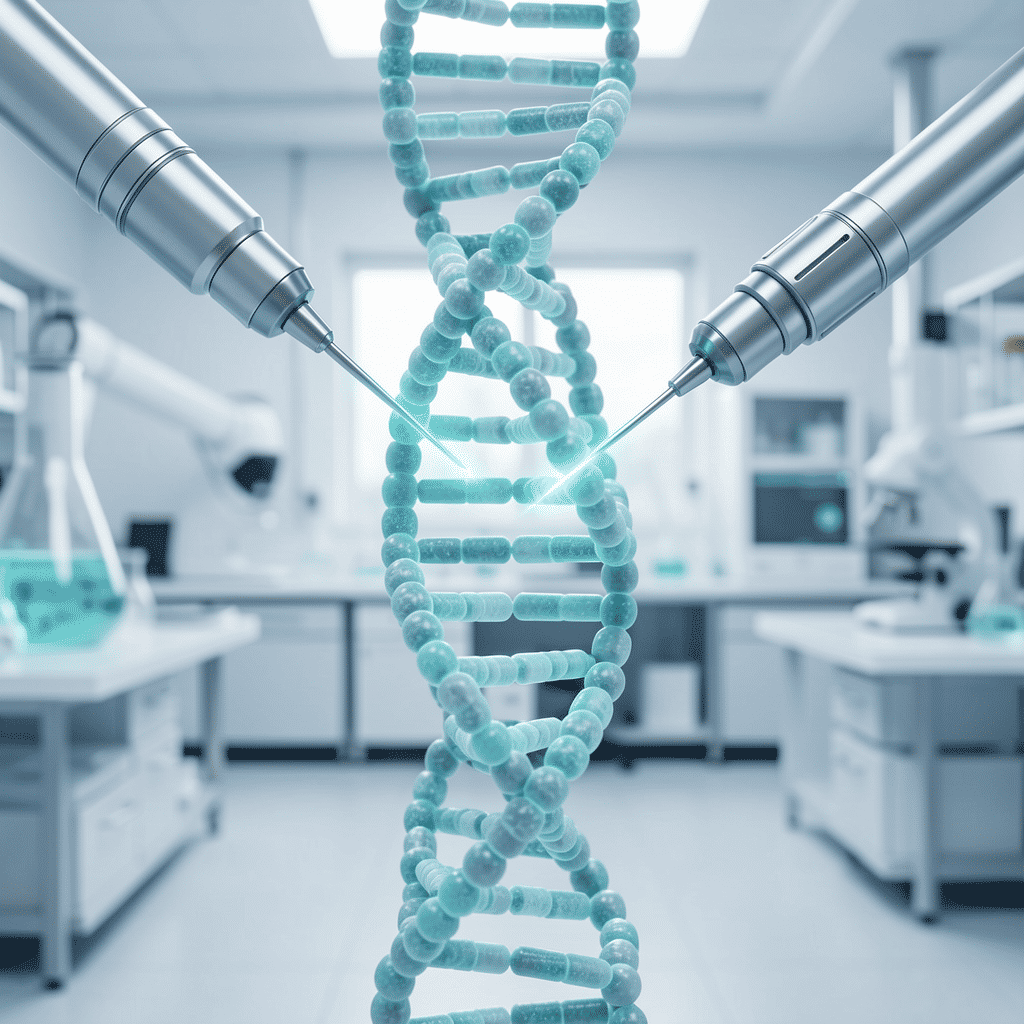
Gene editing, once a concept confined to the realm of science fiction, has rapidly transitioned into one of the most promising fields of biological science, thanks in large part to the advent of CRISPR technology. CRISPR, which stands for Clustered Regularly Interspaced Short Palindromic Repeats, is a revolutionary tool that allows scientists to make precise changes in the DNA of living organisms. This technology has opened up new possibilities for curing genetic disorders, improving agricultural practices, and even potentially enhancing human genetics.
At its core, CRISPR technology functions like a pair of molecular scissors guided by a GPS system. This precision is what sets it apart from previous gene-editing techniques. By customizing the RNA molecule that guides the CRISPR-associated protein (such as Cas9) to a specific sequence of DNA, scientists can target and edit any part of the genome with unprecedented accuracy. This capability not only makes it possible to correct mutations that cause genetic diseases but also provides the means to conduct large-scale studies to understand gene function and regulation.
One of the most compelling applications of CRISPR is in the field of medicine, where it holds the promise of curing genetic disorders once thought to be incurable. Diseases caused by a single genetic mutation, such as cystic fibrosis, sickle cell anemia, and Huntington's disease, are prime targets for CRISPR-based therapies. Pioneering clinical trials have already demonstrated the potential of CRISPR to eliminate the faulty genes responsible for such conditions, offering hope to millions of patients worldwide.
Beyond its therapeutic potential, CRISPR is also being leveraged to advance agricultural biotechnology. With the global population on the rise, CRISPR offers a solution to improve crop yields and enhance nutritional content, ensuring food security for the future. Scientists are using CRISPR to develop crops that are more resistant to pests, diseases, and environmental stresses, reducing the need for chemical pesticides and fertilizers. Additionally, CRISPR can create plants with enhanced nutritional profiles, addressing malnutrition in parts of the world where vitamins and essential nutrients are scarce.
Despite the remarkable potential of CRISPR, the technology is not without ethical considerations. The prospect of using CRISPR to modify human embryos and potentially create "designer babies" raises significant moral and ethical questions about the limits of genetic intervention. It challenges us to consider the implications of altering human genetics and the potential for unintended consequences. As such, ongoing dialogue among scientists, ethicists, policymakers, and the public is crucial to navigate these complex issues responsibly.
Moreover, the risk of off-target effects—where CRISPR inadvertently alters DNA sequences other than the intended target—highlights the need for continued refinement of the technology. Advances are being made to increase the specificity and safety of CRISPR, including the development of high-fidelity Cas proteins and alternative systems like CRISPR-Cas12 and CRISPR-Cas13, which offer their own unique advantages in editing DNA and RNA.
In conclusion, CRISPR technology represents a watershed moment in the field of genetics, with astonishing potential to revolutionize medicine, agriculture, and beyond. While significant challenges remain, the careful and considered development of gene-editing applications promises to unlock new frontiers in human health and well-being. As we continue to explore the capabilities of CRISPR, it remains imperative to balance innovation with ethical oversight, ensuring that this powerful tool is used to benefit humanity as a whole.