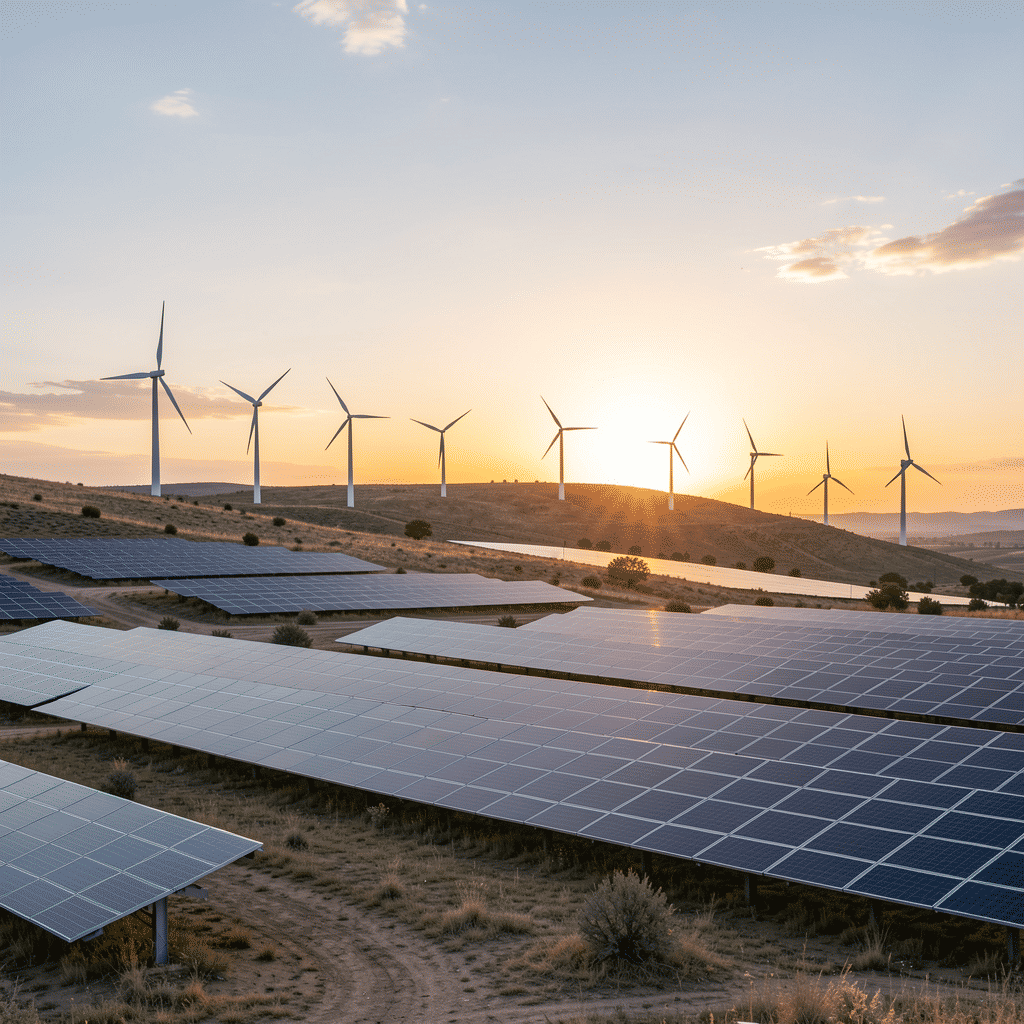
The quest for sustainable energy solutions has never been more urgent, prompting a surge in technological advancements that are transforming solar and wind energy into more viable and efficient power sources. As the global community grapples with climate change and the need to reduce greenhouse emissions, these renewable energy technologies are playing a pivotal role in revolutionizing the energy landscape.
Solar energy, long heralded for its abundant and clean potential, is undergoing a series of technological transformations that enhance its viability. One of the most significant advancements is the development of perovskite solar cells. These cells promise to outperform traditional silicon-based solar panels due to their lower production cost and higher energy efficiency. Perovskites, with their flexible and lightweight properties, can be integrated in innovative ways, such as being printed on building materials or even incorporated into clothing, turning everyday surfaces into energy-generating platforms.
Moreover, bifacial solar panels, which can absorb sunlight from both sides, are increasingly being adopted in solar farms around the world. This dual-sided capability enables them to capture reflected light from the ground and surrounding environments, thereby increasing energy output without requiring additional space. Coupled with tracking systems that follow the sun's trajectory, bifacial panels can significantly enhance overall energy generation, optimizing land usage and reducing costs.
In the realm of wind energy, cutting-edge technologies are similarly propelling the industry forward. One of the most exciting developments is the advent of floating offshore wind farms. These structures, anchored to the ocean floor but floating on the surface, can be deployed in deeper waters where the wind is stronger and more consistent. This innovation not only taps into previously inaccessible wind resources but also mitigates visual and environmental impact concerns associated with traditional land-based and fixed-bottom offshore wind farms.
Furthermore, advancements in turbine design and materials have led to the creation of larger and more efficient wind turbines. The latest models boast blades that can be over a hundred meters long, maximizing the amount of wind energy they can capture. Such turbines are equipped with smart sensors and artificial intelligence, allowing them to adjust their positioning and operation in real-time to optimize performance and maintenance schedules, reducing downtime and operational costs.
Energy storage remains a critical component in the transition to renewable energy, given the intermittent nature of solar and wind resources. Innovative battery technologies, such as lithium-sulfur and solid-state batteries, offer greater energy density and longer life spans compared to traditional lithium-ion batteries. These advancements in energy storage ensure that the power generated from renewable sources can be reliably integrated into the grid, providing consistent and stable energy supply even when the sun isn't shining or the wind isn't blowing.
Finally, the integration of digital technologies plays a crucial role in transforming renewable energy into a more viable power source. Smart grids, enhanced by machine learning and IoT technologies, foster more efficient energy distribution by predicting demand patterns and optimizing energy flows. This not only minimizes waste but also enhances the resilience of the energy infrastructure.
As these technologies continue to evolve, solar and wind energy are becoming increasingly practical and economically feasible. They offer promising solutions to address the urgent demand for sustainable power, paving the way for a greener and more resilient global future. The ongoing innovation in renewable energy is testament to human ingenuity and the relentless pursuit of a sustainable planet, one where clean energy is not just an alternative, but the norm.